In the fast-paced digital age, every business relies on technology to succeed. As systems become more intricate, understanding the difference between observability and monitoring is crucial. While both observability tools and monitoring tools aim to enhance system performance and reliability, they play unique roles in IT management.
Estimated read time: 4 minutes
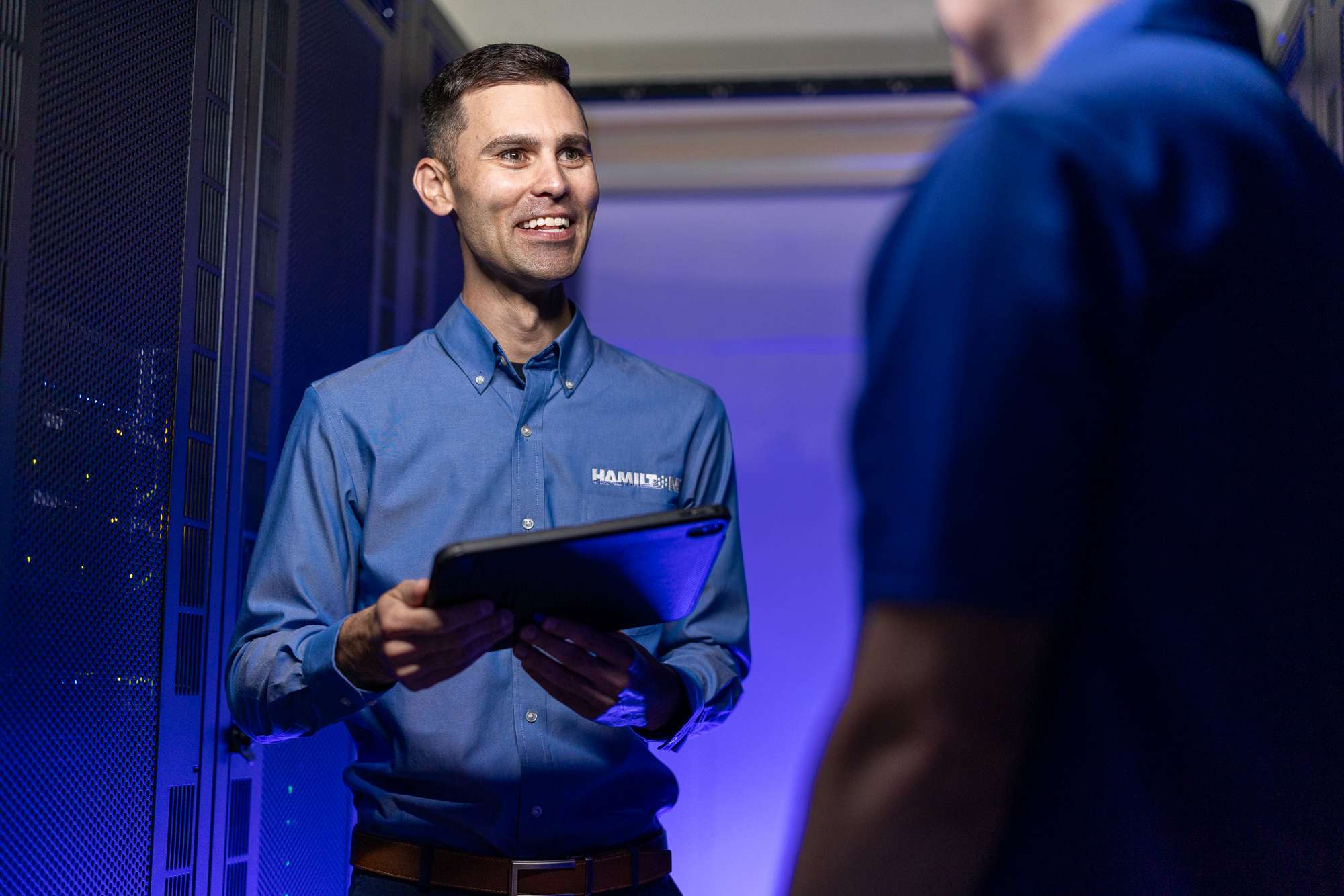
The Difference Between Monitoring and Observing IT Solutions
To truly harness the power of your IT environment, it’s essential to recognize how observability and monitoring work together—and where they diverge. In a recent radio interview, Hamilton Division Manager, Dereck Djernes shares why it’s essential to work with a Managed IT provider like Hamilton and how his team integrates both approaches so that businesses gain not only timely alerts but also actionable insights. This enables proactive decision-making and long-term strategic growth.
Watch Time: 4:20

As Dereck explains, there is a significant difference between monitoring your network for issues that need resolved and proactively observing the network providing preemptive solutions that not only prevent issues but also set your network and your employees up for success even before issues arise.
Let’s dive further into what those differences are and the benefits of each.
Defining Monitoring
Most businesses have an internal IT department that handles the day-to-day IT issues your business faces. The tasks this in-house team takes on are part of the IT monitoring process. Monitoring is all about keeping an eye on system performance including application health, infrastructure stability, spotting issues before they escalate into larger problems and collecting real-time data giving insights into said performance.
Some common monitoring actions that your internal IT team likely does daily include:
- Checking on physical and virtual resources like servers.
- Monitoring applications and their performance.
- Monitoring the network specifically looking at data traffic and connectivity to spot bottlenecks and security threats.
- Analyzing dashboards, logs, and system alerts which offer insights into system performance.
Monitoring is an essential part of keeping your business technology running smoothly and is a full-time commitment. Between tackling day-to-day needs, break/fix issues and overall tech performance, most in-house IT departments are working at full capacity to keep your employees and business on track. This is why oftentimes proactive monitoring and observation gets pushed to the back burner and where Managed IT solutions can provide significant value to organizations.
Understanding Observability
As we continue to understand the managed IT process, it is important to also understand the concept of observability. Observability is a key concept in modern IT that focuses on understanding a system’s internal state through the data it generates. When you introduce the concept of observability into your business, it gives you the tools that allow for a broader analysis of complex systems. This empowers teams to diagnose issues efficiently and improve overall performance.
Observability is simply taking the next step in the process of fully understanding your business technologies and taking a more magnified look at how they function.
Comparing Monitoring and Observability
As you consider the advantages of working with a Managed IT provider, it is important to consider that although many in-house IT departments are fully capable of this type of in-depth analysis, they are already bogged down with the day-to-day business IT issues.
A skilled, professional Managed IT provider like Hamilton uses an entire team of specialists and the latest monitoring tools, including cybersecurity services, to increase your observability. By keeping track of metrics using observability tactics, an outside Managed IT provider can improve the overall effectiveness of your system, while allowing your IT team to focus on the day-to-day monitoring needs of your company. Hamilton becomes an extension to your existing IT department and joins your team in supporting the overall technological health of your company. We focus on partnering with your existing IT team for the overall tech success of your business.
The Future of Monitoring and Observability
A Managed IT provider stays ahead of any digital transformation advances, including those advances that inevitably change the landscape of monitoring and observability. Technologies like edge computing, IoT, and cloud-native architectures are reshaping how we approach system performance and reliability, enabling real-time data processing for deeper operational insights.
Additionally, AI and machine learning are key players in this evolution, automating data analysis and anomaly detection to predict issues before they arise. While AI is an incredible tool for keeping your business running smoothly, our team provides a human-led team to track your system 24/7. By working hand-in-hand with AI tools, our services enhance the capabilities of both monitoring tools and observability tools, allowing teams to focus on strategic improvements.
Looking ahead, businesses can expect to see integrated observability frameworks that combine monitoring, logging and tracing for a cohesive view of system health. As businesses increasingly adopt hybrid environments, the demand for seamless observability will rise, driving innovation in monitoring solutions. With Hamilton Managed IT, you can feel confident that your business will stay at the forefront of these advancements. Reach out to our team today, and let’s have a conversation about how we can provide efficiency and proactivity to your growing business.